Over the past ten years, combat sports have undergone a transformation that goes far beyond the action inside the ring or cage. What was once a gritty, niche spectacle in many parts of the world has evolved into a polished, global entertainment product—complete with influencer crossovers, billion-dollar media deals, and algorithm-driven promotion. The commercialisation of combat sports has reshaped not only how fights are marketed, but also who participates, who watches, and what the industry values.
The Rise of Entertainment Over Competition
Traditionally, combat sports like boxing and mixed martial arts (MMA) built their reputations on sporting merit, rankings, title defences, and legacy. While those elements still matter, the past decade has seen a decisive shift toward entertainment value as the primary driver of revenue.
A defining moment in this shift came in 2017, when Conor McGregor faced Floyd Mayweather in a crossover boxing match. Despite McGregor having no professional boxing record, the fight became one of the highest-selling pay-per-view events in history. It demonstrated that narrative and personality could outweigh competitive legitimacy in driving commercial success.
Similarly, UFC has leaned into personality-driven promotion. Fighters like Israel Adesanya and Sean O’Malley have built massive followings not just through skill, but through charisma, style, and online presence, turning fight cards into entertainment packages rather than purely sporting contests.
The Influencer Effect
One of the most striking developments has been the entry of influencers and non-traditional fighters into combat sports. Events headlined by figures like Jake Paul vs Tyron Woodley or KSI vs Logan Paul have drawn millions of viewers, often rivalling traditional bouts in attention, if not in technical quality.
These fights thrive on spectacle: press conferences, social media feuds, and viral content. Promotions such as Misfits Boxing have built entire business models around this format, blending sport with influencer culture. While purists often criticise these events, they have proven undeniably effective at attracting younger audiences and generating revenue.
Streaming and Media Rights Boom
The way audiences consume combat sports has also changed dramatically. The UFC’s 2019 deal with ESPN marked a turning point, shifting a large portion of its content to a streaming-first model via ESPN+. This guaranteed consistent revenue and broadened access beyond traditional pay-per-view.
In boxing, platforms like DAZN disrupted the market by offering subscription-based access to major fights, including high-profile bouts featuring Anthony Joshua and Canelo Álvarez. This model aimed to reduce reliance on one-off PPV purchases while building long-term audience engagement.
More recently, digital-first promotions and platforms like Triller and now even Netflix have experimented with hybrid events that combine elite competition with spectacle-driven matchmaking.
The Return of Retired Fighters: Nostalgia as a Business Model
Perhaps the clearest and most controversial example of commercialisation is the increasing reliance on retired fighters returning for high-profile, high-paying bouts.
A striking recent case is the 2026 event headlined by Ronda Rousey vs. Gina Carano. Marketed as a historic “super-fight,” it is being streamed globally on Netflix, illustrating just how far combat sports have penetrated mainstream entertainment platforms. Yet the fight also highlights deeper concerns.
Both athletes are returning after ridiculously long absences. Rousey has not fought since 2016, while Carano last competed in 2009. The bout effectively resurrects a matchup that might have made sense as a competitive matchup a decade earlier, but now exists primarily as a commercial spectacle built on legacy and nostalgia.
Critics have been quick to label the event a “cash grab,” pointing to the fighters’ age (39 and 44) and long layoffs as evidence that entertainment value has overtaken sporting integrity. Even regulatory bodies have taken notice, requiring enhanced medical testing, particularly neurological and concussion assessments, before allowing the fight to proceed.
This raises an uncomfortable question: when fighters return after years, or even decades away, are they competing, or are they being commodified?
The Risks Behind the Spectacle
The dangers of this trend are not hypothetical. Combat sports are inherently high-risk, and those risks increase with age, inactivity, and prior injury history. Rousey herself has previously cited concussion issues as a factor in her retirement, underscoring the physical toll such returns can carry.
The Rousey–Carano fight is emblematic of a broader industry pattern. Promoters are increasingly willing to trade competitive relevance for recognisable names, even if those names belong to athletes long removed from peak condition.
This phenomenon is not limited to MMA. Boxing has seen similar examples, most notably the resurgence of legends like Mike Tyson, who has returned to the ring in his late 50s with health problems to face a significantly younger opponent, such as Jake Paul. These events generate enormous attention—but also spark debate about safety, exploitation, and the long-term health of fighters.
Saudi Arabia, State Investment, and the Global Power Shift
One of the most significant forces driving commercialisation in recent years has been the influx of state-backed investment, particularly from Saudi Arabia. Through initiatives like “Riyadh Season,” the country has hosted some of the biggest events in modern combat sports.
Fights such as Anthony Joshua vs. Andy Ruiz II, Tyson Fury vs. Francis Ngannou, and Oleksandr Usyk vs. Tyson Fury have all taken place under the Saudi banner, often accompanied by unprecedented purses and lavish production. These events are not just sporting contests; they are geopolitical showcases, designed to position the country as a global hub for entertainment and sport.
The financial impact is undeniable. Fighters are earning career-high paydays, promoters are securing guaranteed site fees, and events are being staged at a scale previously reserved for the very biggest occasions. However, this has also shifted power dynamics within the sport. Traditional boxing markets like Las Vegas and London are no longer the default homes for major fights.
Critics argue that this model risks distorting competition, as matchmaking can be influenced by financial incentives rather than sporting logic. There are also broader ethical debates about “sportswashing”—the use of sport to improve a nation’s global image.
The TKO Era: Corporate Consolidation and Cross-Promotion
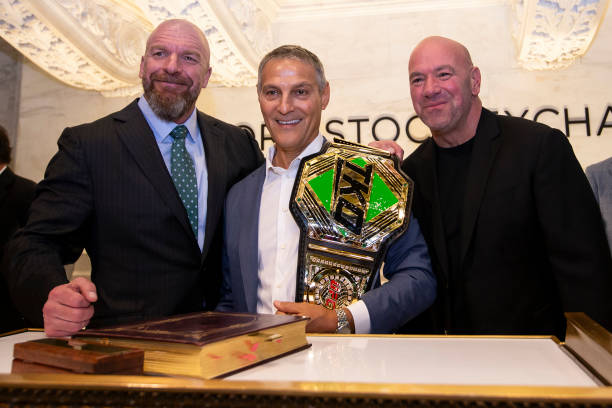
Another defining development has been corporate consolidation, most notably the creation of TKO Group Holdings, the parent company formed through the merger of UFC and WWE under Endeavour.
This move signalled a new era where combat sports and sports entertainment are managed under a unified corporate strategy. While UFC represents legitimate competition and WWE operates as scripted entertainment, both now share resources, marketing strategies, and global distribution frameworks.
The implications are significant. Cross-promotion opportunities have increased, production values have become more standardised, and the line between sport and entertainment continues to blur. WWE’s long-standing expertise in storytelling and character development increasingly mirrors the promotional strategies seen in MMA and boxing.
At the same time, consolidation raises concerns about monopolistic control. As days go by, the number of major players at the top decreases. In MMA, we’ve seen the death of Bellator and the clear upcoming death of ONE Championship. In pro wrestling, TNA being bought by WWE and Ring of Honor being bought by AEW means that fighters and wrestlers have less negotiating leverage, and the industries are becoming homogenised in how events are presented and sold.
Pricing Out the Core Audience
Another consequence of this commercial boom has been the sharp rise in ticket prices for live events. Major fight cards, particularly those staged in Las Vegas, London, or Saudi Arabia, now routinely feature tickets priced far beyond what many long-time fans can afford. Premium seating can run into the thousands, while even standard tickets are often significantly more expensive than they were a decade ago. According to a survey done by OLBG, 45% of 2000 men surveyed attend fewer sporting events due to high ticket prices in the UK.
This shift reflects a broader change in the target audience. Promoters are increasingly catering to high-net-worth individuals, corporate clients, and international tourists rather than local, loyal fanbases. The atmosphere inside arenas has, in some cases, changed as a result, less driven by passionate supporters and more by spectacle consumption.
For many long-standing fans, this creates a sense of exclusion. The sport they followed through smaller venues and lower-profile events has become financially inaccessible at its highest level. In that sense, commercial success has come at the cost of alienating the very audience that helped build combat sports into what they are today.
Sponsorships and Corporate Influence
Commercialisation has brought a surge in sponsorship and corporate partnerships. Events like UFC 229 (headlined by Khabib Nurmagomedov vs. Conor McGregor) showcased not only record-breaking viewership but also extensive brand integration, from canvas logos to broadcast sponsorships.
Boxing has followed suit, particularly with the rise of large-scale events backed by state-sponsored initiatives. Saudi Arabia’s involvement has elevated production value to unprecedented levels while also embedding corporate and national branding deeply into the fabric of events.
While this has significantly increased revenue, it has also led to debates about authenticity and the influence of external funding on matchmaking and event location.
Fighter Pay and Power Dynamics
Despite the influx of money, questions around fighter compensation remain central. High-profile bouts like Tyson Fury vs. Deontay Wilder III generated massive revenue, yet many undercard fighters earned comparatively modest purses.
At the same time, star fighters now wield more negotiating power than ever before. Conor McGregor’s move into boxing, or Francis Ngannou’s crossover into high-profile bouts outside the UFC, highlights a shift where elite athletes can leverage their brand across promotions and even across sports; however, this is only a trend that the elite of the elite are the only people financially able to do.
The Global Expansion
The last decade has seen combat sports expand aggressively into new markets. UFC events in Abu Dhabi, Singapore, and Paris reflect a deliberate strategy to globalise the brand. Abu Dhabi, in particular, became a central hub during the COVID-19 pandemic with the “Fight Island” series—an example of how commercial adaptability kept the sport thriving during global disruption.
Boxing has also embraced international expansion, staging major fights in Saudi Arabia, the Middle East, and Asia. These events are often accompanied by large-scale entertainment productions, positioning them as global spectacles rather than regional contests.
The Double-Edged Sword
Commercialisation has undeniably elevated combat sports to new heights. Fighters have greater visibility, fans have more access, and the industry generates unprecedented revenue. However, this growth comes with trade-offs.
The emphasis on entertainment can dilute sporting integrity. The reliance on retired fighters risks normalising unsafe practices. State-backed investment can reshape competitive priorities. And corporate consolidation may limit diversity and competition within the industry itself.
Conclusion
The commercialisation of combat sports over the past decade has been both transformative and controversial. From the spectacle of Mayweather vs. McGregor to influencer boxing, Netflix-backed fight cards, Saudi-funded mega-events, and the rise of corporate giants like TKO, the industry has redefined itself as a form of mainstream entertainment.
Yet, beneath the bright lights and booming revenues, the core question remains: how far is too far?
The return of fighters like Ronda Rousey and Gina Carano, the resurgence of ageing legends, and the increasing influence of global capital all suggest that commercial incentives are now deeply embedded in the sport’s DNA. As combat sports continue to evolve, balancing profitability with athlete safety and competitive integrity may prove to be the defining challenge of the next decade.
 TheWrestlingFallacy
Leave a comment