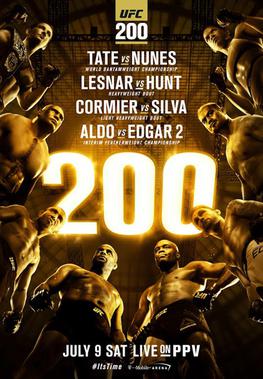
When the UFC announced UFC 200, expectations were almost impossibly high. Marketed as the biggest event in mixed martial arts history, it was intended to celebrate the promotion’s remarkable rise from niche spectacle to mainstream sporting powerhouse. Ten years later, UFC 200 remains one of the most fascinating events the sport has ever produced, not because it fulfilled every expectation, but because it became something entirely different.
Held on 9 July 2016 at the T-Mobile Arena in Las Vegas, UFC 200 arrived during a period of unprecedented growth. The UFC had recently been sold for approximately $4 billion, Conor McGregor had transformed the company’s commercial fortunes, and stars such as Ronda Rousey, Jon Jones and Brock Lesnar had helped push mixed martial arts further into the sporting mainstream than ever before.
Yet the anniversary event became a lesson in how quickly fortunes can change.
The Main Event That Never Was
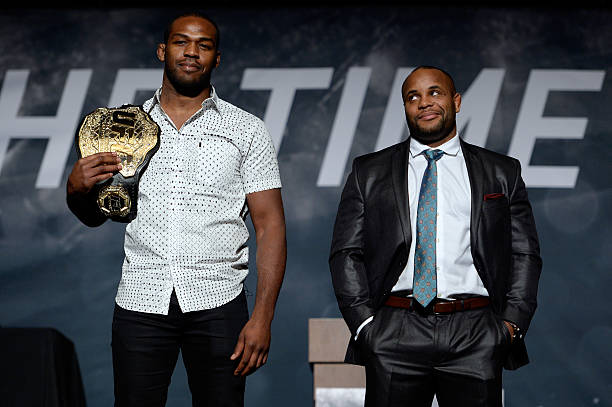
Originally, UFC 200 was set to be headlined by Jon Jones defending the light heavyweight championship against Daniel Cormier in the culmination of one of the greatest rivalries in MMA history.
Their feud transcended championship belts. Genuine personal animosity, contrasting personalities and elite talent had produced a rivalry that captivated fans. After Jones defeated Cormier at UFC 182 before being stripped of the title following legal troubles, the rematch at UFC 200 felt like the perfect conclusion.
Then, just three days before the event, everything collapsed.
Jones was flagged by USADA for a potential anti-doping violation and was removed from the card. In an instant, the UFC’s landmark event lost its biggest attraction.
Cormier instead defended his title against veteran Anderson Silva, who accepted the bout on just two days’ notice. Silva’s willingness to step in was widely praised, although the fight understandably lacked the intensity and significance of the original contest.
Amanda Nunes Announces Herself

Although UFC 200 is often remembered for its setbacks, it also marked the beginning of a new era.
Amanda Nunes entered the event as the challenger against Miesha Tate for the women’s bantamweight championship. Many viewed Tate as the favourite following her dramatic victory over Holly Holm earlier that year.
Instead, Nunes produced a breathtaking first-round performance.
Overwhelming Tate with relentless pressure and clinical striking before securing a rear-naked choke, Nunes captured her first UFC title and began one of the greatest championship reigns the sport has ever seen.
Over the following years, she would defeat Ronda Rousey, Cris Cyborg, Holly Holm, Valentina Shevchenko, Germaine de Randamie and many other elite competitors, establishing herself as arguably the greatest female fighter in MMA history.
Looking back, UFC 200 was less the culmination of an era than the beginning of Nunes’ dominance.
Brock Lesnar’s Brief Return
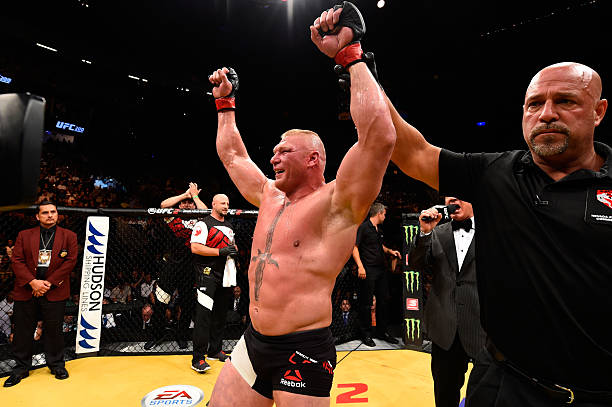
Perhaps the night’s biggest commercial attraction came from Brock Lesnar.
Having left the UFC in 2011, Lesnar returned after several years in professional wrestling to face Mark Hunt in a heavyweight contest. His comeback generated enormous attention, with fans eager to see whether the former UFC heavyweight champion could still compete at the elite level.
Lesnar earned a unanimous decision through effective wrestling and top control.
However, the victory quickly became overshadowed when he later tested positive for the banned substance clomiphene, resulting in the bout being changed to a no-contest.
The controversy further complicated the legacy of an event already defined by disrupted plans and anti-doping headlines.
Daniel Cormier’s Difficult Triumph
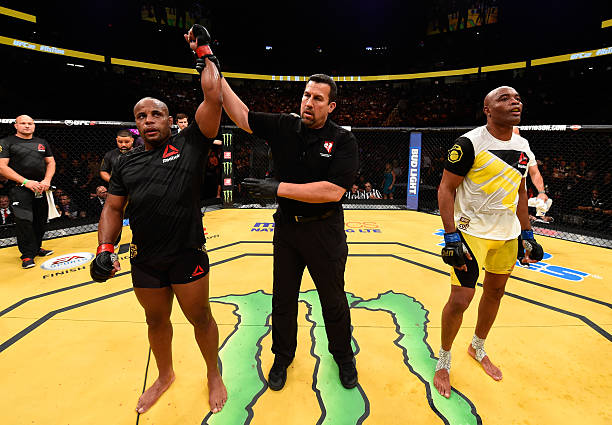
For Daniel Cormier, UFC 200 was bittersweet.
He successfully defended his championship against Anderson Silva, but neither he nor the fans regarded the victory as complete vindication. The fight lacked the emotional intensity and competitive stakes that had made the Jones rivalry so compelling.
Cormier remained champion, yet the unresolved rivalry continued to hang over his career.
It would take another year before he and Jones finally met again, only for that contest to become engulfed in further controversy after Jones tested positive for the anabolic steroid Turinabol following his UFC 214 rematch against Daniel Cormier in 2017.
A Card Full of Quality
Despite the turbulence surrounding the headline attractions, UFC 200 delivered a remarkably strong evening of competition.
Earlier in the evening, Cain Velasquez produced one of the most dominant performances of his career, overwhelming Travis Browne with the relentless pace and suffocating wrestling that had once made him the consensus best heavyweight in the world. After flooring Browne with heavy punches, Velasquez mixed striking and takedowns seamlessly before finishing the fight with a barrage of ground-and-pound late in the opening round.
The victory was particularly significant given Velasquez’s injury-plagued career. Having fought only once in the previous two-and-a-half years following his loss of the heavyweight title to Fabricio Werdum, many questioned whether the former champion could ever return to his devastating best. Against Browne, he looked every bit the relentless pressure fighter who had dismantled the likes of Junior dos Santos and Antonio Silva during his championship reign.
Sadly, hindsight lends the performance a degree of melancholy. Persistent injuries would continue to derail Velasquez’s career, and he would compete only twice more in the UFC before retiring from mixed martial arts. As a result, his emphatic victory at UFC 200 is remembered as one final glimpse of a heavyweight talent operating close to his remarkable peak.
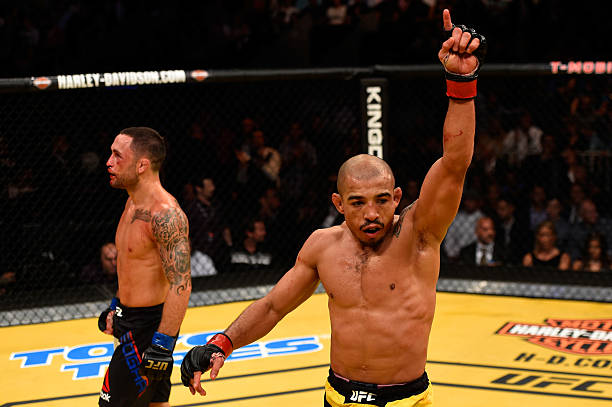
José Aldo reclaimed the interim featherweight title with a composed unanimous decision victory over Frankie Edgar in one of the highest-quality technical contests on the card. Their rematch came three years after Aldo had edged Edgar at UFC 156, and once again the Brazilian showcased the elite takedown defence, razor-sharp counter-striking and impeccable timing that had defined his reign atop the division.
While Conor McGregor’s stunning 13-second knockout of Aldo had dominated the narrative in the months leading up to UFC 200, this performance served as a timely reminder of the former champion’s enduring brilliance. Aldo repeatedly frustrated Edgar’s movement with crisp jabs, punishing leg kicks and perfectly judged counters, rarely allowing the former lightweight champion to establish any sustained offence.
Although the interim title existed because McGregor had moved up to challenge for the lightweight championship, Aldo’s victory reinforced his status as one of the greatest featherweights the sport has ever seen. Ten years on, the bout stands as one of the finest examples of high-level mixed martial arts striking and tactical discipline ever seen inside the Octagon.
Elsewhere, Kelvin Gastelum outclassed Johny Hendricks, while former champions T.J. Dillashaw and Johnny Hendricks also featured on a card packed with established names.
In terms of overall talent, few UFC events before or since have matched its depth.
The Shadow of USADA
In hindsight, UFC 200 became symbolic of a transitional period for the sport.
The introduction of year-round USADA testing had fundamentally altered MMA. Established stars were being removed from cards, high-profile positive tests dominated headlines, and the sport was adjusting to a new reality of far stricter anti-doping enforcement.
Jones’ withdrawal before the event and Lesnar’s subsequent failed test ensured that anti-doping became as much a talking point as the action inside the cage.
While frustrating at the time, these controversies also reinforced the UFC’s commitment to stronger regulation during a transformative period.
The Event’s Lasting Legacy
Ten years later, UFC 200 occupies a unique place in MMA history.
It is remembered less as the flawless celebration the UFC intended and more as a snapshot of a sport in transition.
The old guard, including Silva, Lesnar, Aldo and Velasquez, shared the stage with the next generation. Amanda Nunes announced herself as a future legend, Daniel Cormier continued to cement his Hall of Fame credentials, and the UFC itself stood on the brink of a new commercial era following its landmark sale.
Ironically, the event’s imperfections have become central to its enduring appeal.
Rather than a polished showcase, UFC 200 reflected mixed martial arts at its most unpredictable. Careers changed overnight, legends returned, champions emerged, and controversies altered narratives before the opening bell had even rung.
It remains one of the most discussed cards in UFC history, not because everything went according to plan, but because almost nothing did.
A decade on, UFC 200 stands as a reminder that in mixed martial arts, even the biggest plans can unravel in spectacular fashion. Yet sometimes, those unexpected twists leave a richer legacy than anyone could have scripted.


Leave a Reply