
Back-to-back numbered cards to start the UFC year, and on this occasion, we’re heading to the land down under for UFC 325, where two-time Featherweight Champion Alexander Volkanovski will defend his title against talented Brazilian Diego Lopes in a rematch from UFC 314, where Volkanovski won via unanimous decision to gain the throne.
UFC 325 is not simply another numbered card; it represents an intersection of rivalry, career-defining crossroads and stylistic contrasts that could reshape multiple divisions. Headlined by a featherweight championship rematch layered with unfinished business, the card balances elite consequence at the top with quiet but meaningful positioning battles beneath it.
Main Event: Alexander Volkanovski vs Diego Lopes 2 – Featherweight Championship
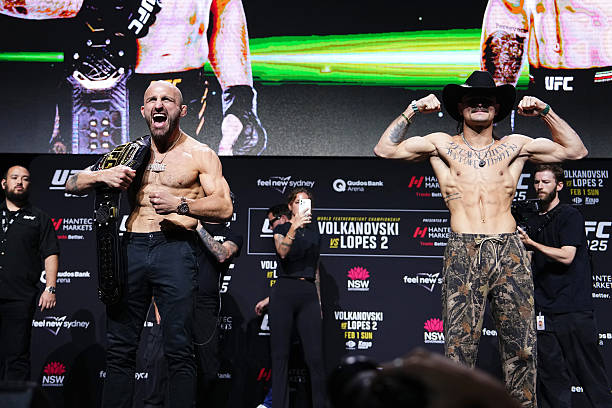
The rematch between Alexander Volkanovski and Diego Lopes anchors UFC 325 with both narrative gravity and tactical intrigue.
Volkanovski enters once again as the champion, defined by consistency rather than dominance. His success has never relied on overwhelming power or athletic disparity, but on layered fundamentals: distance management, intelligent volume and an ability to neutralise opponents’ strengths through positioning and pace. Even as physical margins narrow, his understanding of where fights are won remains elite.
Diego Lopes offers a contrasting threat profile. Explosive, opportunistic and dangerous in transitional moments, Lopes thrives when structure breaks down. His offence is built on sudden engagement, sharp combinations, aggressive level changes and the ability to capitalise when opponents hesitate. Their first meeting showed that Lopes can compete at this level, but also highlighted where discipline and experience still separate contender from champion.
Tactical Fault Lines
This fight will hinge on rhythm control. Volkanovski’s objective is to keep the bout predictable: operating behind feints, lateral movement and steady output that denies Lopes the chaos he needs to flourish. Lopes, by contrast, must compress space and manufacture moments of disorder, forcing Volkanovski into reactive exchanges rather than calculated sequences.
The centre of the Octagon will be decisive. Volkanovski wants to own it through angles and timing; Lopes wants to disrupt it with forward pressure and sudden bursts. The fighter who dictates where exchanges occur is likely to dictate the result.
Why the Outcome Matters
A Volkanovski win would reinforce his status as one of the most adaptable champions of his era — a fighter capable of evolving without reinventing himself. It would also close the chapter on one of the division’s most compelling challengers.
For Lopes, victory would represent a definitive arrival. Winning the belt in a rematch would validate his aggressive style that many have thought cannot succeed against the division’s wisest and best.
Co-Main Event: Dan Hooker vs Benoît Saint Denis – Lightweight Pressure and Adaptation
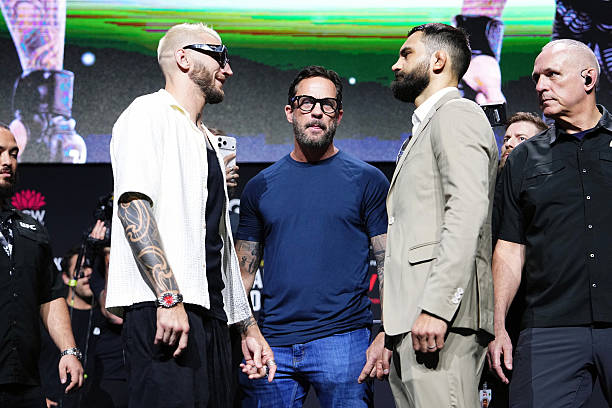
This lightweight co-main event functions as a litmus test for both men.
Dan Hooker remains one of the division’s most resilient competitors. His game is built on pressure, durability and an ability to drag opponents into extended exchanges where his volume and toughness become weapons. While he is no longer framed as a prospect, his experience against elite competition gives him an edge in chaotic fights against the new breed looking to take over.
Benoît Saint Denis represents the modern lightweight archetype: aggressive, well-rounded and comfortable transitioning between phases. His rise has been fuelled by momentum and finishes, but this bout demands composure as much as violence.
Technical Breakdown
Hooker will look to establish tempo early, using jabs and forward movement to force Saint Denis to react defensively. Saint Denis’ success depends on breaking that rhythm, mixing entries, threatening grappling exchanges and preventing Hooker from settling into sustained pressure.
The clinch and transitional grappling exchanges could quietly decide rounds, even if the fight remains largely upright.
Hooker has been in many wars throughout his career, yet in the somewhat limited viewing of Saint Denis, we’ve seen him slow down considerably in the second and third rounds of fights. If Hooker can survive a round one purge from the Frenchman, it’ll be interesting to see if the Kiwi can put on pressure as the fight goes longer, takedowns become more laboured, and the striking becomes much sloppier from Saint Denis.
Divisional Stakes
A Hooker win keeps him as a relevant boogyman in a division that rarely allows stagnation. For Saint Denis, beating a veteran of Hooker’s calibre would confirm that his rise is not merely momentum-based, but sustainable at the elite level.
Rafael Fiziev vs Mauricio Ruffy – Lightweight Volatility Versus Control

This bout pits two dangerous strikers at different stages of their lightweight journeys.
Rafael Fiziev is defined by creativity and controlled aggression. His striking variety and willingness to take calculated risks make him difficult to prepare for, particularly when he can dictate the pace.
Mauricio Ruffy brings raw explosiveness and confidence, but this fight represents a step into deeper waters. Against an opponent as tactically aware as Fiziev, moments of overcommitment can be costly.
Tactical Nuance
Fiziev’s path lies in angle creation and layered offence — forcing Ruffy to react rather than initiate. Ruffy, meanwhile, must impose himself early without sacrificing structure, finding the balance between aggression and patience.
Why It Matters
The winner positions himself as a legitimate player in a crowded lightweight picture. A loss, conversely, risks stalling momentum in a division that rarely waits for recalibration.
Tai Tuivasa vs Tallison Teixeira – Heavyweight Identity Test
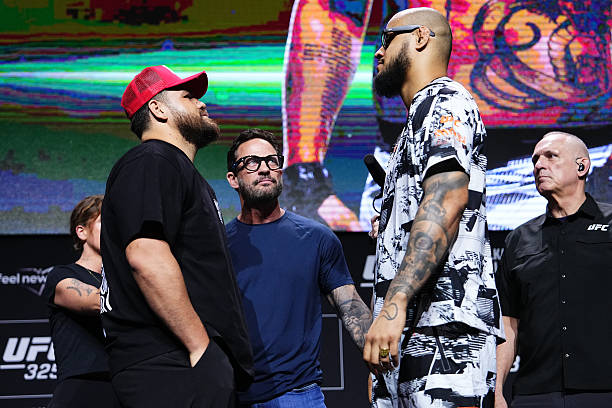
Heavyweight fights often revolve around moments, and this contest is no exception.
Tai Tuivasa remains one of the division’s most dangerous punchers, but questions linger about sustainability and adaptability. The Aussie is on a five-fight skid and has said himself this could be his last fight in the UFC if he doesn’t win impressively. Tallison Teixeira offers a more methodical approach, prioritising structure and distance management over chaos. This is only his third UFC fight after losing to Derrick Lewis in 35 seconds last time out in July. Similarly to the ‘Black Beast’, Tuivasa has been in the octagon with some of the best Heavyweight’s in the world and has the experience Texeira lacks. This is your standard old guard vs new upstart matchup.
Technical Considerations
Tuivasa’s success requires early engagement and pressure, turning exchanges into opportunities for decisive power. Teixeira’s task is to restrain, forcing Tuivasa to work, defend and operate on the outside. At 6’7 vs Tuivasa at 6’2, Teixeira could wisely pick the veteran apart from the outside with low kicks, as Tuivasa can be very heavy on his feet, however he must make sure his chin is tucked because Tai’s timing has always been impressive and if the Brazilian finds himself within his range, it only takes one perfectly timed strike to end it all. Another thing to look out for is Tai’s conditioning going into the fight. He came into training camp much lighter than usual. Could that spark a revitalised version that could make one last run towards the top of UFC’s big men?
Divisional Implications
This fight speaks to the direction of the heavyweight division itself. Is raw power still enough, or is technical consistency becoming the new currency?
Quillan Salkilld vs Jamie Mullarkey – Momentum Versus Durability
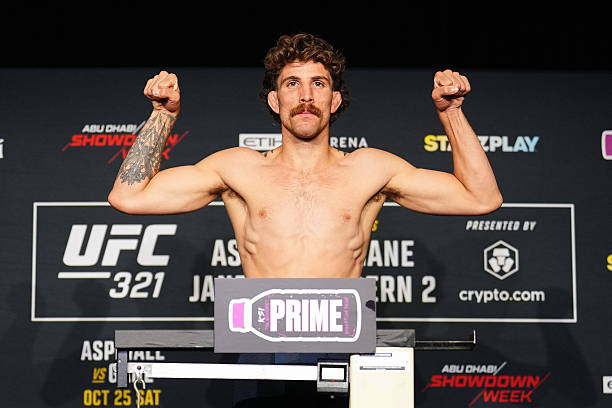
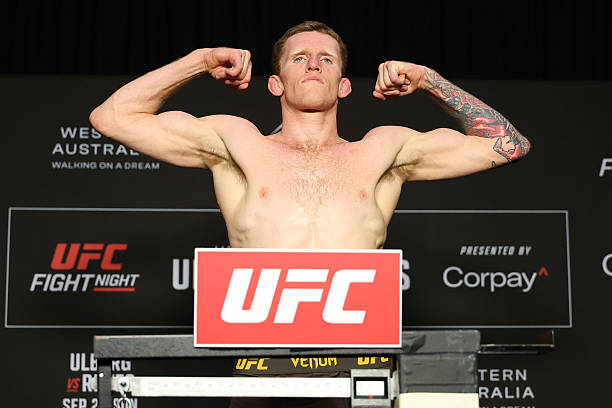
This lightweight bout contrasts upward momentum with proven grit.
Quillan Salkilld arrives with sharp striking and growing confidence after a vicious round one, headkick victory over the talented Nasrat Haqparast, while Jamie Mullarkey brings experience, durability and a willingness to turn fights into battles of attrition.
Tactical Breakdown
Salkilld will look to control range and pick his moments, avoiding prolonged exchanges. Mullarkey’s path is pressure — forcing volume and testing whether Salkilld’s composure holds under sustained resistance.
Why the Outcome Matters
A Salkilld win accelerates his rise within the division. A Mullarkey victory reinforces his role as a reliable disruptor of emerging talent.
Final Thoughts
UFC 325 is a card defined by consequence rather than novelty. Championship answers, career recalibrations and divisional clarity all converge across one night.
The margins will be thin, the adjustments subtle, and the repercussions lasting. By the end of what will be a thrilling night, multiple divisions may have a different look about them.
 TheWrestlingFallacy
Leave a comment