Prologue: Thirteen Seconds to Immortality
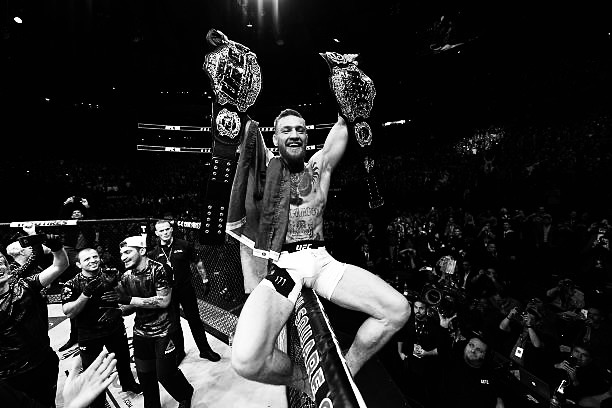
December 12, 2015. The MGM Grand Garden Arena in Las Vegas pulsed with anticipation. José Aldo, the featherweight champion who had reigned undefeated for a decade, stepped across the Octagon toward the Irishman who had tormented him for months with words sharper than any punch. Opposite him, Conor McGregor, hands loose, smile sharp, stared back like a man who already knew the ending.
The bell rang. Thirteen seconds later, it was over. A single left cross crumpled Aldo to the canvas, erasing years of dominance in an instant. McGregor, arms spread in triumph, had not just claimed a belt—he had seized the world’s attention.
That night, he looked immortal.
Ten years later, the memory feels almost mythic—because everything that followed would challenge, complicate, and ultimately tarnish the legend.
Act I: From Crumlin to the Cage

Conor Anthony McGregor was born on July 14, 1988, in Crumlin, a working-class neighborhood in south Dublin. The streets were tough but tight-knit, marked by economic struggle and the sense that big dreams belonged elsewhere.
Young Conor found his first escape at the Crumlin Boxing Club. Under the dim lights of a community gym, he learned the fundamentals: footwork, timing, the snap of a punch. He wasn’t the biggest or the strongest, but even then, coaches noticed something—an unusual sharpness in his strikes, a flair for performance.
Still, fighting wasn’t his destiny just yet. As a teenager, McGregor flirted with football (soccer) and even worked briefly as a plumber’s apprentice. Long days of hauling pipes and crawling under houses hardened him to the grind but also ignited his determination. “I remember thinking, there has to be more than this,” he later recalled.
That “more” appeared when he met coach John Kavanagh, a pioneer of mixed martial arts in Ireland. Kavanagh introduced McGregor to the multi-disciplinary chaos of MMA: striking, grappling, submissions. McGregor dove in with an obsessive hunger. By 2008, he had turned professional, stepping into the cage for the first time.
Act II: The Cage Warriors Years
McGregor’s early career was not a straight line of brilliance. He lost twice in his first six fights—once by submission, once by stoppage. But each setback seemed to harden his resolve rather than deter it.
By 2011, fighting under the Cage Warriors promotion, McGregor began to refine the style that would make him famous: wide karate-like stance, precise counter-punching, surgical left hand, and relentless forward pressure. His swagger was already evident. He didn’t just fight opponents—he dismantled them psychologically before the bell.
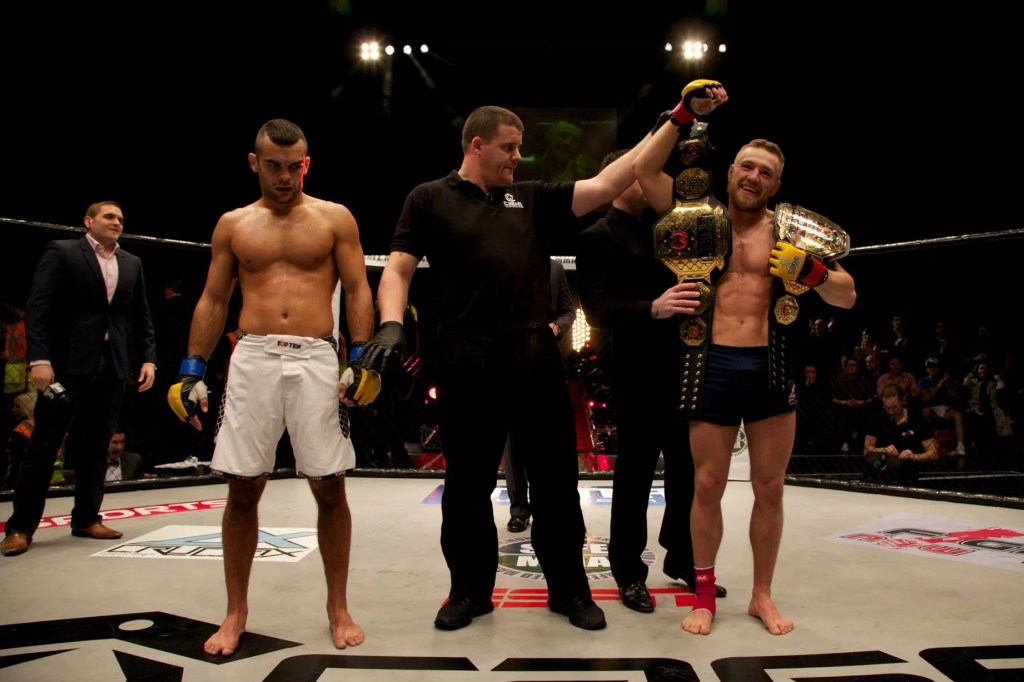
In 2012, his breakthrough came. On a chilly June night in Dublin, McGregor captured the Cage Warriors Featherweight Championship with a first-round TKO. Six months later, he returned and claimed the Lightweight belt as well, becoming the first fighter in the promotion’s history to hold titles in two divisions simultaneously.
For European MMA fans, it was a coronation. For the UFC, it was a signal: Ireland had found its star.
Act III: The UFC Breakthrough

A Star is Born
April 6, 2013. Stockholm, Sweden. On the undercard of a modest Fight Night event, few outside Ireland knew the name Conor McGregor. That changed in 67 seconds.
Marcus Brimage, a muscular brawler, came charging forward with aggression. McGregor, loose and sharp, slipped, countered, and delivered a lightning barrage of uppercuts that crumpled Brimage to the canvas. The Irishman strutted away, arms raised, roaring to the crowd:
“We’re not here to take part. We’re here to take over.”
It was the kind of line that would define his brand—equal parts audacity and prophecy. Dana White and Lorenzo Fertitta, sitting cageside, knew instantly: this wasn’t just a fighter. This was a showman who could sell tickets, fill arenas, and capture imaginations far beyond the sport’s hardcore fan base.
The Holloway Fight – A Test of Grit
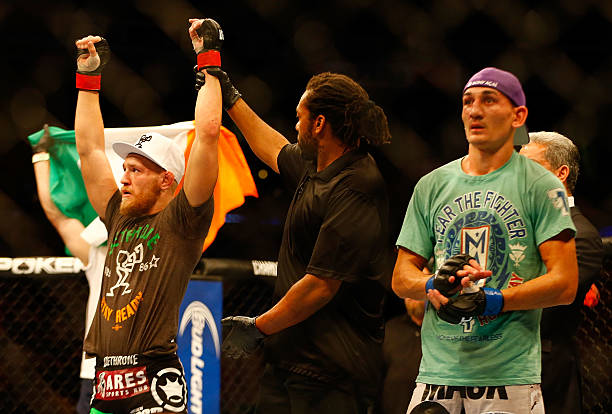
McGregor’s second UFC outing came against a young Max Holloway in August 2013. The fight wasn’t spectacular in highlight form, but it revealed something crucial about McGregor: resilience.
Midway through, he tore his ACL, a devastating injury. Yet he adapted, grounding Holloway and riding control to a unanimous decision win. Few knew he had fought on one leg, but those who did—his coaches, UFC brass—understood the toughness behind the brashness.
That win kept the hype alive. Surgery sidelined him for nearly a year, but in absence, his legend grew. Interviews, trash talk, and a growing cult following in Ireland amplified the mystique.
The Dublin Homecoming
When McGregor returned in July 2014, it wasn’t just another fight—it was a homecoming. The UFC staged an event in Dublin, with McGregor headlining against Diego Brandão.
The O2 Arena (now 3Arena) shook as thousands of Irish fans sang and chanted. McGregor fed off it, walking out with the confidence of a man carrying a nation on his shoulders. In the first round, he overwhelmed Brandão with strikes, finishing him inside five minutes.
The post-fight interview became iconic:
“We’re not here just to take part—we’re here to take over!”
That night, the UFC knew they had lightning in a bottle. McGregor wasn’t just a fighter; he was a cultural phenomenon.
The Path to Mendes

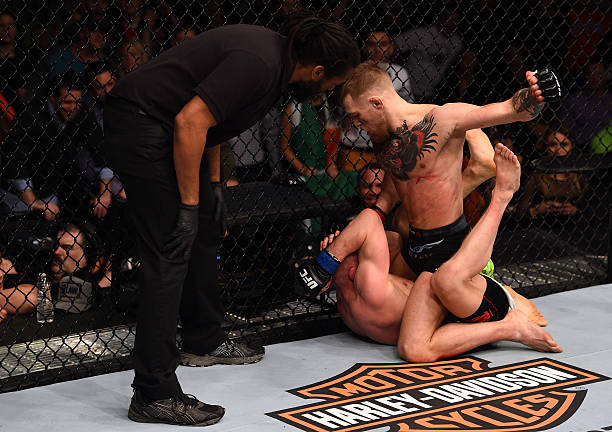
Next came Dustin Poirier, then a highly regarded featherweight contender. At UFC 178 in September 2014, McGregor dismantled him with ease—dropping him in the first round with a perfectly placed left hand. For many, it was the moment they stopped doubting.
McGregor followed by dispatching Dennis Siver in early 2015, climbing the ranks while continuing his verbal assault on José Aldo, the reigning featherweight king.
The press tour leading to their scheduled July 2015 bout became the stuff of legend. From Rio to Las Vegas, McGregor taunted Aldo relentlessly—snatching his belt at press conferences, mocking his English, even predicting Aldo would not show up.
When Aldo pulled out injured weeks before the fight, Chad Mendes stepped in on short notice.
UFC 189 – The Mendes War

July 11, 2015. The MGM Grand Garden Arena glowed emerald as thousands of Irish fans traveled to Las Vegas, transforming the venue into Dublin West. McGregor walked out to a haunting live performance of The Foggy Dew by Sinéad O’Connor—cementing one of the most memorable entrances in MMA history.
But Mendes wasn’t there for theatrics. A decorated wrestler, he immediately exposed McGregor’s ground vulnerabilities, taking him down repeatedly and punishing him with elbows. For two rounds, the dream teetered.
Then, late in the second, McGregor stuffed a takedown, landed clean strikes, and battered Mendes to the canvas. The referee waved it off. McGregor was the interim featherweight champion.
Emotion poured out as he roared into the microphone:
“If one of us goes to war, we all go to war!”
The crowd erupted. The stage was now undeniable—McGregor vs. Aldo was destiny.
UFC 194 – The Thirteen-Second Knockout

December 12, 2015. Aldo vs. McGregor, the most anticipated featherweight fight in UFC history.
The buildup had been 18 months of venom, tension, and spectacle. Aldo, undefeated in ten years, sought to silence the loudest man in sports. McGregor, brimming with confidence, promised a knockout inside one round.
The bell rang. Aldo charged with a right hand. McGregor slipped, countered, and detonated his left. Thirteen seconds. The fastest finish in UFC title history.
As Aldo crumpled, McGregor ran across the Octagon, arms spread wide, basking in the eruption. It was a moment etched in time—not just a victory, but a seismic shift in the sport’s history.
Conor McGregor was now undisputed featherweight champion of the world. And the world, it seemed, belonged to him.
Act IV: Five Rounds of Fire — The Diaz Rivalry

UFC 196: Shock at Welterweight
The matchup that changed the McGregor myth wasn’t the one he trained for. Scheduled to face lightweight champion Rafael dos Anjos in March 2016, McGregor instead met Nate Diaz on short notice at welterweight (170 lb) after dos Anjos withdrew. Diaz, who’d kept a triathlete’s engine between camps, walked in long, relaxed, contemptuous. The venue—MGM Grand Garden Arena, Las Vegas—buzzed with the sense that McGregor, unbeaten in the UFC, was about to underline his invincibility across a second division.
Round 1. McGregor started like a man intent on ending the night early. He stabbed at Diaz’s lead leg, whipped body kicks to the ribs, then dialed in the left hand—hard, straight, clean. Diaz bled and smiled, talking back between combinations, flicking the Stockton jab as if to say: we’re just getting started. McGregor’s accuracy won the frame, but Diaz’s stance and length were beginning to tug the fight into his rhythm.
Round 2. McGregor pressed again with lefts and spinning body kicks—then Diaz’s one-two landed like a live wire. The tempo flipped. Diaz poured on volume, slipping and answering, talking and walking forward. Hurt and breathing heavy, McGregor shot a desperation takedown. Diaz sprawled, advanced, mounted, and when McGregor turned, slid the arm under the chin. Rear-naked choke, 4:12 of Round 2. Silence, then disbelief. For the first time in the UFC, McGregor tapped. The aura cracked.
The loss detonated across the sport. McGregor’s power and precision were real—but so were pacing, defense, and discipline up a division against a bigger, longer specialist with a granite chin and smothering jiu-jitsu. He would get his rematch. But the story of 2016 would be whether he could adjust.
UFC 202: The Adjustment
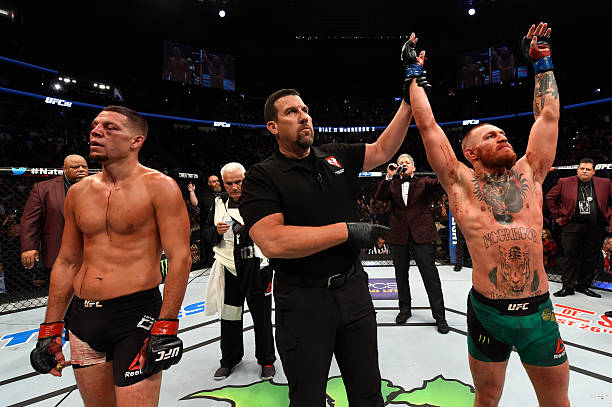
Five months later, McGregor returned to Las Vegas with a different plan and a different posture—less swagger, more science. The camp had been built around restraint: pick the target leg, pick the moments, pick yourself off the floor if you must. Opposite him, Diaz kept the same bored face and the same busy hands. Venue: T-Mobile Arena, Aug. 20, 2016.
Round 1. McGregor worked from a lower stance, chopping Diaz’s lead leg and taking small exits instead of greedy chases. He scored clean with the left and dropped Diaz twice—short counters that exploited Nate’s squared entries. Diaz popped up each time, slinging volume to the horn. (Official stats later credited McGregor with three knockdowns across the fight—two in the first ten minutes, one more in Round 2.)
Round 2. More calf kicks. Another clean left hand puts Diaz down again. The crowd swells—and then the tide turns. Diaz, bleeding but tireless, traps McGregor on the fence and unloads in bunches. McGregor’s shoulders begin to rise; he eats combinations and must clinch to slow the flood. The bell intervenes.
Round 3. Diaz momentum. He marches forward, talking, peppering, mauling in the clinch. Elbows, short hooks, knees. McGregor is battered and breathing, fighting the fight Diaz wants—dirty, claustrophobic, cumulative. One judge would score it 10-8 Diaz. McGregor stumbles to the stool on fumes.
Round 4. The round that saved the rivalry for McGregor. He re-commits to the leg, circles off the cage, fires single shots and exits clean. Not pretty—effective. Diaz still stalks, but the sting has dulled; the front leg won’t plant the same.
Round 5. Chaos. Diaz empties the tank, clinches hard, head-butts McGregor to the fence with pressure and pitter-patter that becomes real damage in clusters. McGregor rallies in pockets, but command has given way to grit. They flurry to the horn and lean into one another, exhausted, defiant.
The cards read 48–47, 47–47, 48–47—majority decision for McGregor. Two judges had him winning Rounds 1, 2 and 4; Diaz took 3 and 5. The numbers tell one story; the five-round pendulum tells another: a fighter learning on the jobhow to manage distance, damage, and pacing against a man who refuses to go away.
The rivalry stood even. The lessons—about weight, about weapon choice, about humility—would carry into the most important night of McGregor’s career.
Act V: “Precision Beats Power” — Madison Square Garden

November 12, 2016 — UFC 205, New York City. The UFC’s long-awaited debut at Madison Square Garden became a coronation. Opponent Eddie Alvarez, a battle-tested lightweight champion with wrestling and grit, promised to drown McGregor with pressure. Instead, he spent ten minutes inside a striking clinic.
Round 1. McGregor fought like a man who’d memorized the angles. He hovered just outside Alvarez’s entries, then dropped him twice with effortless left hands—slip, counter, mat. When Alvarez rose, McGregor reset, hands low, eyes calm, punishing each reckless step with check hooks and pull-counters.
Round 2. Alvarez tried to wrestle; McGregor framed, shrugged, and stepped back to mid-range—his killing field. A feint drew Alvarez’s high guard; a four-piece—1-2, slip, 2-3— crashed through. Alvarez fell. TKO at 3:04 of Round 2.McGregor became the first fighter in UFC history to hold two divisional titles simultaneously, a line that will sit in every record book as long as the promotion exists.
In the post-fight glow, he delivered another mantra for the highlight reels—“Precision beats power, and timing beats speed.” It was less trash-talk than thesis statement: McGregor at his best isn’t chaos. It’s poise.
What These Fights Revealed
- At 170 pounds, McGregor’s one-shot power threatens, but efficiency and economy mean more. Leg-kicks and discipline kept him afloat in the rematch; chasing a finish drowned him in the first.
- Cardio wasn’t a flaw so much as a budget. He could spend bursts of brilliance or he could ration. At UFC 202 he rationed just enough.
- Against Alvarez, the most complete version of McGregor appeared: pristine distance, immaculate counters, anti-wrestling good enough to buy separation, and the composure to punish each mistake. The performance remains his cleanest championship-level win.
Act VI: The Mayweather Detour

By 2017, Conor McGregor was bigger than the UFC. He wasn’t just a fighter; he was a spectacle. And he knew it. After conquering two divisions, the next mountain wasn’t in MMA at all—it was in boxing.
The opponent: Floyd “Money” Mayweather Jr., the 49-0 master, undefeated, untouchable, already the richest prizefighter of all time. On paper, the matchup bordered on the absurd: a debuting professional boxer against a generational defensive genius. But McGregor’s presence made it viable. The trash talk, the global press tour, the “Notorious” aura—it was alchemy for pay-per-view.
The four-city world tour was part rock concert, part roast battle. In Los Angeles, McGregor strutted in a three-piece suit with pinstripes spelling “F*** You” down the fabric, pointing at Mayweather as the crowd howled. In Brooklyn, he danced around the ring while Mayweather showered him with dollar bills. In London, he stood on a table, bellowing:
“They said I’ve got no chance. They said I’ve got zero chance. They can say what they want. On August 26th, I shock the world!”
When fight night came at the T-Mobile Arena in Las Vegas, McGregor delivered more than many expected.
Rounds 1–3. The Irishman started fast, pawing with jabs, slapping uppercuts, and even sneaking through a clean left. To the surprise of purists, Mayweather gave away the early rounds, allowing McGregor’s confidence to grow.
Rounds 4–6. Mayweather adjusted. He raised the guard, pressed forward, and forced McGregor to work at an unsustainable pace. The body shots began to sap him.
Rounds 7–9. The gas tank emptied. McGregor’s punches slowed to slaps; Mayweather’s began to land clean. The tide had turned.
Round 10. Trapped on the ropes, McGregor absorbed a barrage. Referee Robert Byrd stepped in. TKO. Floyd Mayweather moved to 50-0; McGregor walked away beaten but richer than ever.
The numbers were staggering: 4.3 million pay-per-view buys, the second-highest in combat sports history, and a purse that vaulted McGregor into nine-figure territory. He had lost—but the cultural win was undeniable. He was now a global celebrity, his name etched in mainstream sports conversation forever.
But the payday also created a new problem: how do you come back hungry after tasting that kind of money?
Act VII: Return to the Octagon

Nearly two years passed before McGregor returned to the UFC. The landscape had shifted. At lightweight, a new force had emerged—Khabib Nurmagomedov, an undefeated Dagestani wrestler who mauled everyone in his path. By 2018, Khabib held the lightweight title. The collision course was inevitable.
The buildup to UFC 229 was combustible. In April, months before the fight was even signed, McGregor infamously attacked a fighter bus in Brooklyn—throwing a dolly through the window in search of Khabib, who had earlier confronted McGregor’s teammate Artem Lobov. The footage went viral, the UFC used it in promotion, and the incident landed McGregor in legal hot water.
By October, the grudge had grown into something bigger than sport. The press conferences were venomous. McGregor hurled insults at Khabib’s religion, family, and nation. Khabib, stone-faced, repeated only one line:
“I’m going to maul this guy.”
UFC 229: McGregor vs. Khabib
Round 1. Khabib wasted no time. He shot low, driving McGregor to the fence, chaining takedowns into control. McGregor stuffed briefly but was grounded, eating punches from half-guard. The tone was set.
Round 2. Disaster. Khabib landed a massive overhand right—one of the cleanest punches of his career—that stunned McGregor. The wrestler became a striker, unloading shots before dragging McGregor down again. Mounted, McGregor absorbed punishment. A 10-8 round on two judges’ cards.
Round 3. McGregor’s lone success. He stuffed takedowns, landed a few lefts, and slowed the pace. But the strikes lacked sting; the aura of menace was gone.
Round 4. Khabib dragged him back down, slipped behind, and cinched a neck crank. McGregor tapped at 3:03 of the round. Undefeated Khabib had exposed every hole: cardio, grappling, composure.
But the fight didn’t end there.
Khabib spat words at McGregor, vaulted the cage, and leapt into McGregor’s cornermen, sparking a post-fight brawl that spilled into the arena. Security flooded the Octagon. McGregor swung at Khabib’s teammates; punches flew from every direction. It was chaos—an unforgettable, ugly coda to the most lucrative fight in UFC history.
The pay-per-view numbers were record-breaking: 2.4 million buys, still the UFC’s all-time high. The sport had never been bigger. But for McGregor, the defeat and aftermath marked the beginning of a new chapter: one where his star power outweighed his results, and controversy became inseparable from his name.
Act VIII: A Flicker of the Old Fire
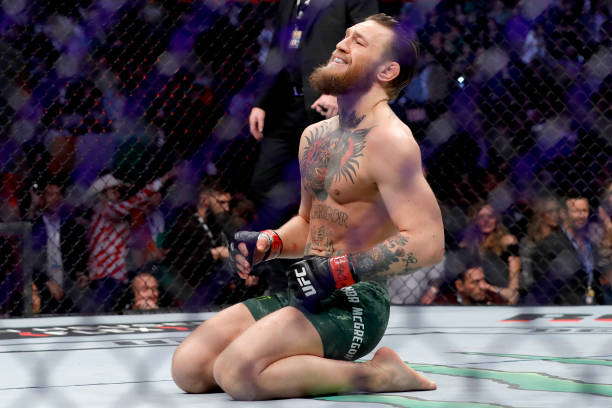
After the Khabib mauling and subsequent suspension, McGregor disappeared for over a year. When he finally returned in January 2020, it was against Donald “Cowboy” Cerrone at welterweight. The fight lasted just 40 seconds.
McGregor charged forward at the bell, surprising Cerrone with shoulder strikes in the clinch—an unorthodox but devastating choice. A head kick followed, then a barrage of punches. Cerrone crumpled. McGregor roared, arms wide, as if to declare: The King is back.
The performance reignited belief. But in hindsight, it was a spark, not a flame.
Act IX: The Poirier Trilogy


If the Cerrone fight was a reminder of his explosiveness, the Dustin Poirier trilogy revealed the erosion of his edge.
Fight Two (UFC 257, January 2021): McGregor entered confident, sharp, landing clean lefts early. But Poirier’s calf kicks mounted, slowly chopping away at McGregor’s movement. By Round 2, McGregor’s mobility was gone. Poirier seized the moment, swarming him with punches and knocking him out. It was the first time McGregor had been finished by strikes in the UFC.
Fight Three (UFC 264, July 2021): Determined to avenge the loss, McGregor opened aggressively—kicks, elbows, venom. But late in Round 1, disaster struck. As he planted his leg after a missed punch, his tibia snapped. He crumpled back against the cage, clutching the broken limb as the referee waved it off.
The sight was haunting: McGregor, sitting on the canvas, his leg grotesquely bent, still yelling at Poirier and promising revenge. It was theater, but it was also the clearest symbol yet—his body had betrayed him.
Act X: The Inactivity Problem
From 2018 to 2021, McGregor fought only four times, winning once. The hunger that once drove him had dulled. He was now balancing whiskey ventures, business endorsements, and the trappings of global celebrity.
In the Octagon, opponents had caught up to him. They knew how to weather his early storm, exploit his gas tank, chop his legs, wrestle him down. He was no longer the puzzle without a solution—he was the man chasing the version of himself who’d conquered two divisions.
The Poirier trilogy left him 1–3 across his last four fights. The myth of inevitability was gone. And for the first time, people asked openly: Was Conor McGregor finished as a fighter?
Act XI: Outside the Cage — The Shadow of “The Notorious”

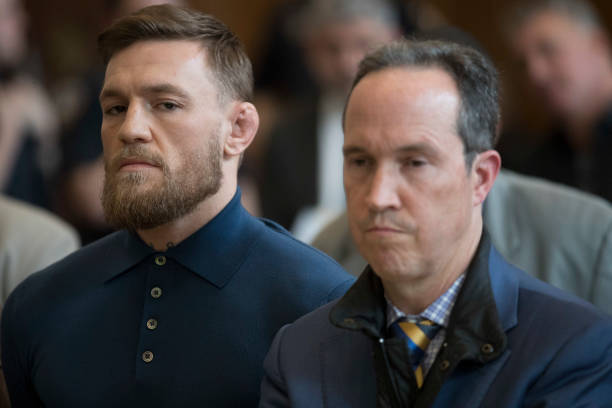

By the time the Poirier trilogy ended, one thing had become clear: McGregor’s fights were no longer the only story. Increasingly, his headlines came from what happened outside the Octagon. To understand his fall, you have to understand the themes of that chaos.
1. Violence Beyond the Bell
McGregor’s persona was always steeped in aggression. The sharp tongue, the strut, the mind games—they worked brilliantly in the Octagon. But outside of it, the same energy often spilled into reckless violence.
- The Brooklyn Bus Attack (2018): Infuriated after Khabib confronted teammate Artem Lobov, McGregor flew to New York with an entourage. He threw a dolly through a UFC fighter bus window, injuring several fighters. Though charges were pled down, the footage went viral. The UFC promoted it shamelessly—weaponising chaos as marketing. It was the first sign that McGregor’s notoriety could outweigh his fighting.
- The Miami Phone Incident (2019): McGregor smashed a fan’s phone outside a nightclub and was arrested for robbery and criminal mischief. Charges were later dropped, but the headlines cemented a picture: a man quick to lash out when challenged in public.
- Pub Altercations: From striking an older man in a Dublin bar in 2019 (reportedly for refusing to drink his whiskey brand) to brawls in nightclubs, McGregor’s fists became tabloid fodder. The violence that once thrilled audiences was now unpredictable, uncontrolled.
2. Allegations of Sexual Misconduct
Perhaps the most damaging shadow on McGregor’s legacy has been a string of sexual assault and misconduct allegations.
- In Dublin (2018), he was accused of assaulting a woman in a hotel. Criminal charges were never filed, but civil cases followed, and in late 2024, a jury found him liable in one case, awarding damages to the victim.
- Other allegations surfaced in Corsica (2020), during the NBA Finals in 2023, and in connection to a yacht incident (2022). Some were dismissed; others remain tied up in civil litigation.
Each new story chipped away at his image. What once was “outlaw charisma” had become something darker, raising questions about abuse of power, accountability, and how long sponsors, promoters, and fans would tolerate scandal.
3. Brand Erosion and Backlash
In 2018, McGregor’s whiskey brand Proper No. Twelve launched as a roaring success, riding his fame. For a time, it outsold established Irish whiskeys. But by 2023, the tide turned.
- Boycotts: Following his civil liability ruling, retailers in Ireland—including Cork and Dublin airports—pulled the whiskey from shelves. Social campaigns urged fans to stop buying his products.
- Sponsorship Fallout: Global brands that once courted him with millions began to distance themselves. His volatility made him unmarketable to family-friendly corporations.
The empire he built on swagger and influence began to crack under the weight of scandal.
4. Law, Media, and Public Opinion
McGregor’s legal troubles became cyclical: incident → arrest or lawsuit → media frenzy → apology or bravado → repeat. He often oscillated between contrition and defiance—community service in one case, profanity-laden Instagram posts in another.
For the Irish public, he went from a symbol of pride to a polarizing figure. Some saw him as a local boy who rose too high, too fast, undone by excess. Others viewed him as a tragic hero, consumed by fame, wealth, and his own persona.
5. The Cost of Celebrity
At the heart of the chaos is the paradox: the very traits that made McGregor a global superstar—brashness, defiance, volatility—were the same ones that, unchecked, fueled his downfall.
He wanted to be the biggest star in combat sports history. He achieved it. But superstardom created an ecosystem where his worst impulses were indulged, his controversies monetized, his consequences softened. The cage that once disciplined him became secondary to the circus around him.
Act XII: A Legacy in Question
By 2024, McGregor’s career was no longer defined by fights alone. It was a balance sheet of brilliance and baggage. For every knockout highlight, there was a lawsuit. For every belt lifted, a scandal unfolded.
Ten years after his thirteen-second masterpiece over Aldo, McGregor remains a paradox: a once-in-a-generation talent who changed the sport forever—and a cautionary tale of how fame, fortune, and unchecked excess can consume even the brightest star.
Epilogue: The Ghost of UFC 194
There are moments in sports that live outside of time. Tiger’s putt at Augusta. Jordan’s last shot in Utah. Tyson walking through the smoke in Las Vegas.
And then there is Conor McGregor, December 12, 2015.
Thirteen seconds. One punch. A champion undone, a star ascended. In that instant, McGregor wasn’t just a fighter—he was inevitability incarnate. He was Ireland’s dream realized, combat sports’ center of gravity, a man who bent the world to his will.
Looking back a decade later, the memory feels almost too perfect. Because nothing that came after could live up to it.
The arc of McGregor’s career is the oldest story in sports: a rise too fast, a fall too far. The hunger that carried him from Crumlin to Cage Warriors to the UFC was insatiable—until it was fed. Once the world was his, he no longer chased greatness with the same purity. The cage, once his proving ground, became only one stage among many. Whiskey launches, court appearances, nightclub scandals—all began to crowd out the image of the fighter who had stunned José Aldo.
And yet, to call his career a failure would be dishonest. He changed the UFC forever. He shattered pay-per-view records, put European MMA on the map, and made fighters believe they could be more than athletes—they could be brands, empires. Every walkout song, every presser insult, every bespoke suit on a contender owes something to him.
But greatness is measured not only by what you build, but by what remains when you’re gone. And for McGregor, the question lingers. Does the image of his knockout over Aldo outshine the lawsuits, the broken leg, the courtroom headlines? Or do the controversies overwhelm the legend, leaving only a cautionary tale of how fame can consume the man who chases it?
Perhaps the answer lies in that contradiction. McGregor is not one or the other. He is both—the most electrifying fighter of his generation, and the most combustible. A man who gave fans memories they will tell forever, and a man who left many wishing he had lived differently.
Ten years on, the ghost of UFC 194 still haunts the sport. Every time a young fighter rises fast, every time a press conference turns into theater, every time the Octagon lights dim and the crowd buzzes with possibility—Conor McGregor’s shadow is there.
He was never meant to last. He was meant to blaze, briefly, brilliantly, and then burn everything down.
And in those thirteen seconds against Aldo, when the left hand landed and the world seemed to stop, it was enough.
 TheWrestlingFallacy
Leave a comment