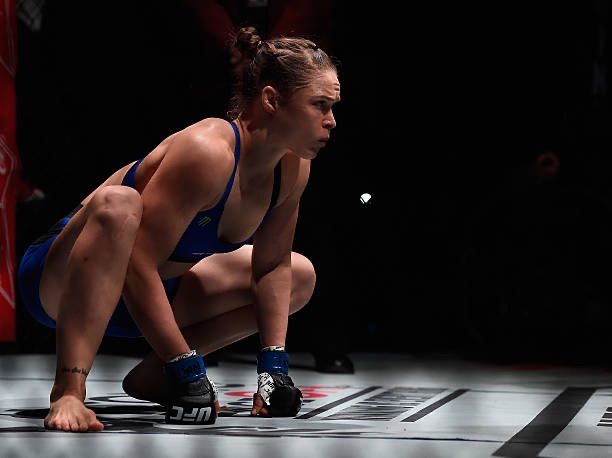
Ten years ago today, the aura of invincibility that surrounded Ronda Rousey was shattered 59 seconds into the second round by Holly Holm in front of a stunned crowd in Melbourne, Australia. Yet that moment, dramatic as it was, cannot erase what Rousey had already accomplished. She wasn’t just a dominant champion – she was the UFC’s first true megastar. Long before Conor McGregor seized the global spotlight, it was “Rowdy” Ronda who smashed doors down, changed perceptions of women in combat sports, and redefined what a superstar could look like in the UFC.
A Fighter from a Different World
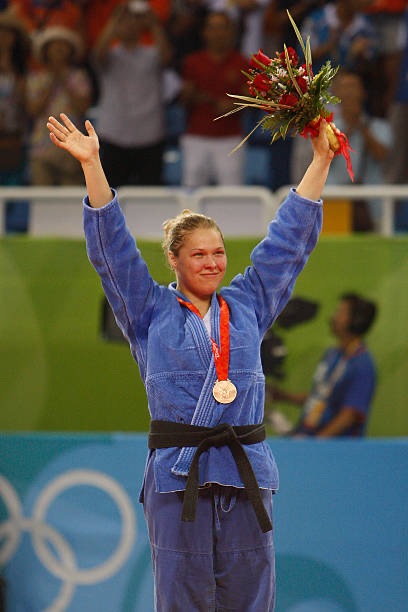
Ronda Rousey’s rise wasn’t born purely from MMA roots. A judo prodigy, she became the first American woman to win an Olympic medal in judo (bronze in Beijing, 2008). That grappling pedigree became the bedrock of her MMA style – relentless pressure, lightning-fast clinches, and of course, her iconic armbar. Her transition to MMA began in 2010, and her meteoric ascent started almost immediately.
In just her third professional fight, Rousey signed with Strikeforce, then the biggest stage for women in MMA. There, she captured the bantamweight title and defended it with the same devastating formula: armbar, first round, total dominance.
The UFC Finally Backs Women

When the UFC announced in 2012 that it would finally introduce a women’s division, it shocked many purists – not least UFC President Dana White, who had once infamously declared that women would never fight in the Octagon.
But Rousey changed that. Her talent, charisma, and marketability forced the UFC to take a chance. She was named the first-ever UFC Women’s Bantamweight Champion without having to fight for the vacant title – a decision some questioned at the time, but history would more than vindicate.
Her debut came at UFC 157 in February 2013 against Liz Carmouche. Rousey won by armbar (again), but the fight was more than a victory – it was a statement. Women belonged in the UFC, and Rousey was the reason why.
The Title Reign: Rousey’s Dominant Defences
After submitting Liz Carmouche at UFC 157 in 2013, Rousey embarked on one of the most dominant title reigns in UFC history. Over the course of two years, she defended her title six times — five of those wins came in the first round, three in under a minute. Each fight reinforced the growing belief that she was untouchable.

Each of these title defences added to her mystique. Not only was she winning — she was annihilating world-class challengers. By the time she faced Holly Holm at UFC 193, Rousey was being compared to Mike Tyson in terms of fear factor and dominance. Her fights felt like foregone conclusions — until they weren’t.
Beyond the Octagon: Rouseymania
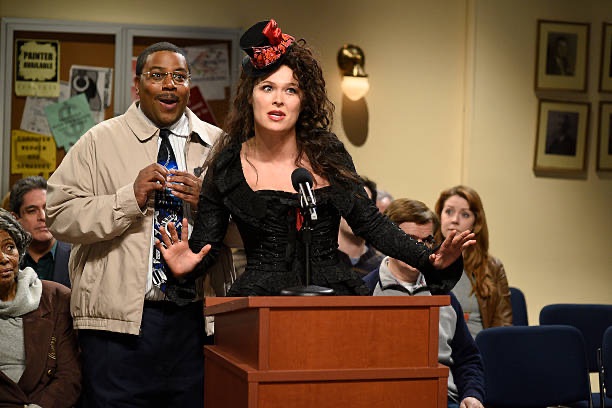
What set Rousey apart wasn’t just her dominance – it was the cultural impact. She was a media phenomenon. She hosted Saturday Night Live, appeared on the cover of Sports Illustrated, acted in major films like Furious 7 and The Expendables 3, and became a role model for millions of girls and women worldwide.
In the early 2010s, no UFC fighter – man or woman – had the mainstream appeal Rousey had. She was named the World’s Most Dominant Athlete by Sports Illustrated and even received ESPY awards for Best Female Athlete and Best Fighter, beating out male counterparts.
For the UFC, she was a marketing dream: a fierce competitor who could submit you in under a minute and sell out arenas while walking red carpets in Hollywood the next day.
The Fall in Melbourne
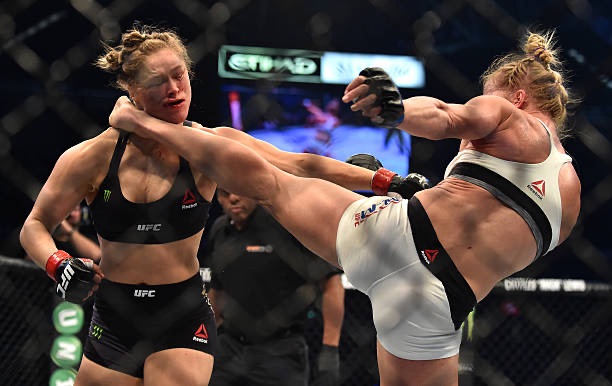
Then came 14 November 2015 – UFC 193. Rousey was undefeated at 12-0 and widely considered unbeatable. But Holly Holm, a decorated striker with a calm demeanour, dismantled Rousey with surgical precision. For a full round, Holm picked her apart with crisp footwork, sharp counterstrikes, and perfect distance management. Then, 59 seconds into the second round, Holm landed a devastating left head kick that sent Rousey crashing to the canvas – ending the fight and her reign in emphatic fashion.
Rousey’s aura of invincibility was gone. Though she would return once more against Amanda Nunes in 2016, she never reclaimed her former dominance.
Legacy: More Than Wins and Losses
Rousey didn’t need a second act in MMA to solidify her place in history. She was the pioneer – the reason women fight on every UFC card today. Stars like Amanda Nunes, Valentina Shevchenko, Zhang Weili, and Alexa Grasso stand on the foundation Rousey built.
Even outside MMA, Rousey continued to break ground, moving to WWE where she won championships and headlined WrestleMania, becoming a crossover success in yet another combat arena.
Ten Years Later
Ten years on from her first loss, the MMA world remembers Ronda Rousey not for how her story ended, but for how it began – with dominance, charisma, and a fearlessness that reshaped an entire sport.
She wasn’t just the UFC’s first women’s champion. She was its first women’s superstar. And perhaps more importantly, she proved that in a male-dominated sport, a woman could not only compete – she could rule.
 TheWrestlingFallacy
Leave a comment