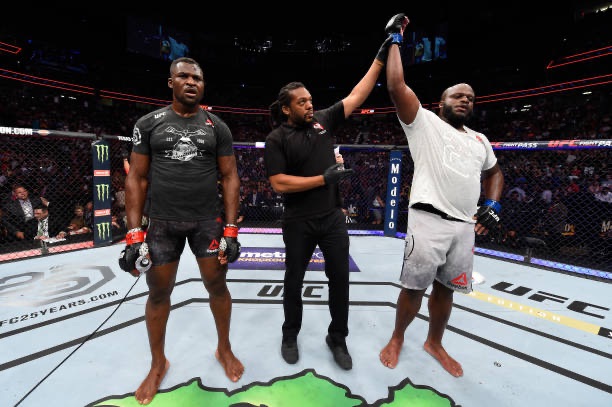
There’s an old saying in combat sports: “Everyone loves the heavyweights.” The logic is simple. Bigger men mean bigger power, and bigger power means bigger knockouts. From boxing’s golden ages of Joe Louis, Muhammad Ali, and Mike Tyson, the heavyweight division has always been sold as the crown jewel — the place where giants settle primal questions with their fists.
But in MMA, the reality has been different. While lightweight, featherweight, and even bantamweight are often praised for depth, skill, and pace, heavyweight is regularly criticised as the sport’s weakest weight class. Fans groan at sluggish main events, pundits lament the shallow talent pool, and champions like Stipe Miocic, Francis Ngannou, and Jon Jones — dominant as they were — often feel like anomalies in a division that struggles for consistency.
So why does heavyweight MMA feel so noticeably worse than the other divisions? The answer lies in physiology, economics, and the psychology of giants.
1. The Talent Pool Problem
The first issue is simple maths. Heavyweights are rare. The average man worldwide weighs between 150–180 pounds. The pool of athletes naturally walking around at 230–260 is minuscule. And of that small pool, many choose sports with far greater financial reward.
A 6’4”, 250-pound athlete in the United States might be courted by the NFL or NBA as a teenager, with scholarships and multi-million-dollar contracts on the horizon. In Russia, he may end up in wrestling, sambo, or judo. In Africa, football still outshines all else. Very few 250-pound men dream of being paid $10,000 to show and $10,000 to win in a UFC undercard bout.
At lightweight or featherweight, there is a tidal wave of athletes — wrestlers, kickboxers, regional standouts — all funneled into MMA. At heavyweight, the funnel is dry.
2. The Skill Gap

Because the pool is shallow, the level of refinement suffers. Watch a bantamweight fight between top-10 contenders and you’ll likely see clean boxing, layered feints, sharp footwork, scrambles in every clinch. At heavyweight, many fighters rely on one or two weapons: a big overhand, a head kick, or raw wrestling.
The old cliché — “heavyweights don’t need to be technical because one punch can end it” — is true, but it’s also the problem. A single punch erases the need for mastery. Fighters who gas after five minutes, who don’t check leg kicks, who never developed jabs, can still win fights simply because they hit like trucks. The division rewards power over polish, and so it rarely evolves.
Compare that with flyweight or lightweight, where finishing ability is lower, cardio is higher, and technique becomes the only way to win consistently. The smaller the fighter, the sharper the skill.
3. Cardio and Chaos
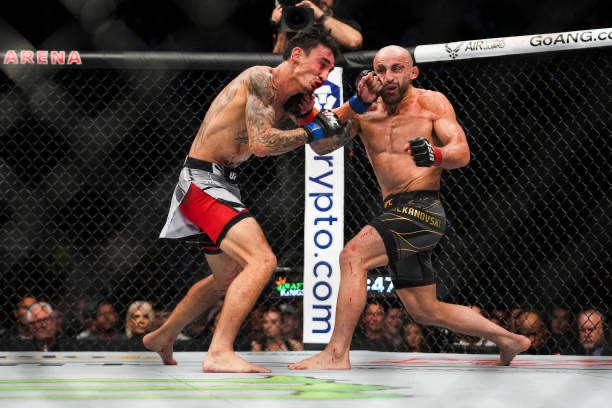
Cardio is the hidden separator in MMA. A lightweight fight often maintains a furious pace for 15 or 25 minutes. Heavyweights simply can’t match that. Carrying 250 pounds of muscle and bone through scrambles, clinches, and striking exchanges is brutally taxing. The result is predictable: slow first rounds, sloppy second rounds, exhausted third rounds.
This is why heavyweight fights so often devolve into staring contests or wild, looping exchanges — both men are simply too tired to execute game plans. The chaos can be fun in small doses, but compared to the tactical brilliance of lighter divisions, it feels primitive.
4. The Legacy of Boxing and the UFC’s Marketing
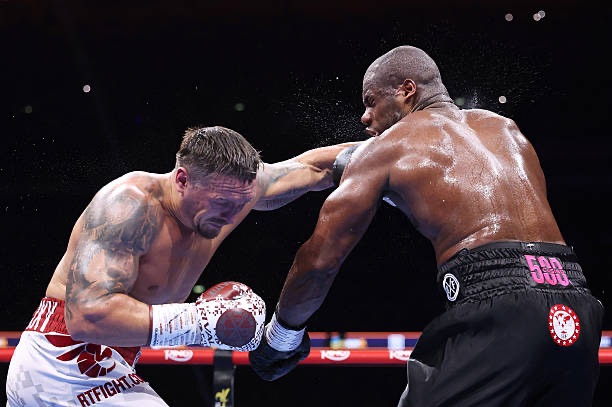
Heavyweight MMA has also suffered from misplaced expectations. Fans grew up on boxing’s heavyweight heroes, where size and spectacle defined eras. The UFC borrowed that marketing, often pushing heavyweights as the “real” main events. Yet time and again, lighter fighters delivered the classics: Frankie Edgar vs. Gray Maynard, Poirier vs. Holloway, Khabib vs. Conor.
Heavyweight bouts, meanwhile, too often ended in gassed clinches or forgettable decision slogs. The promise of “big men, big violence” has led to constant disappointment when technique or pacing fails to match the hype.
5. The Exceptions That Prove the Rule
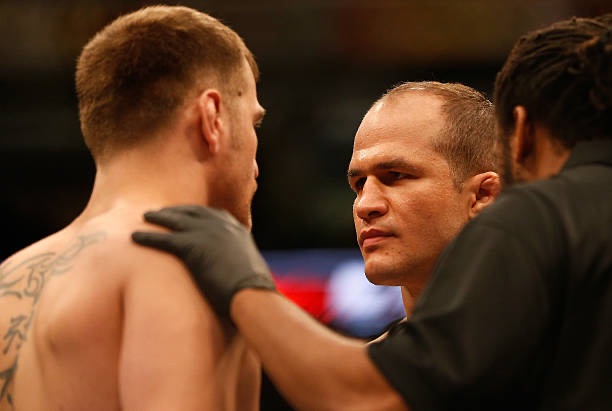
Of course, heavyweight hasn’t been without brilliance. Fedor Emelianenko’s Pride run remains one of MMA’s most iconic legacies. Stipe Miocic defended the UFC belt more times than anyone in history. Francis Ngannou combined terrifying knockout power with steadily improving technique, culminating in his dethroning of Miocic and the likes of Tom Aspinall and Ciryl Gane now.
But the fact that fans can name the all-time heavyweight greats on one hand underscores the issue. In other divisions, the list of legends runs long. At heavyweight, it feels like a rotating cast of “the one guy who figured it out” standing above a pile of inconsistency.
6. The Future of Heavyweight

There are some reasons for optimism. Global scouting has improved, and heavyweights from Eastern Europe, Africa, and Asia are increasingly entering the UFC. Training methods are better, meaning big men are learning modern skills rather than plodding brawls but we are really yet to see a great wave of next generation heavyweight talent.
Also, the structural problems remain. The talent pool will always be shallow. The cardio ceiling will always be lower. And the division will always tempt fans with the promise of knockouts while delivering disappointment more often than not.
Conclusion: The Division of Contradictions
Heavyweight MMA is a paradox. It’s simultaneously the most marketable and the least reliable, the division that headlines cards but rarely delivers classics, the weight class that carries the mystique of combat sports but lags behind its smaller peers in almost every metric of quality.
Fans will always tune in, because a 260-pound man swinging leather can erase everything in an instant. But for those who love MMA as a craft, the artistry, the nuance, the chess game — the real beauty still lives below 170 pounds.
Heavyweights will always be the biggest men in the room. They just aren’t often the best fighters.
Featured Image (Photo by Josh Hedges/Zuffa LLC/Zuffa LLC via Getty Images)
 TheWrestlingFallacy
Leave a comment